In today’s rapidly evolving business landscape, staying competitive requires not just adaptation but also innovation. One such innovation that has gained significant traction in recent years is Enterprise AI (Artificial Intelligence). As companies seek to optimize their operations, improve customer experiences, and make data-driven decisions, the role of Enterprise AI companies and services has become increasingly vital. In this article, we will explore the world of Enterprise AI development, the functions of Enterprise AI companies, the range of services they offer, and the transformative potential of Enterprise AI solutions.
Understanding Enterprise AI Development
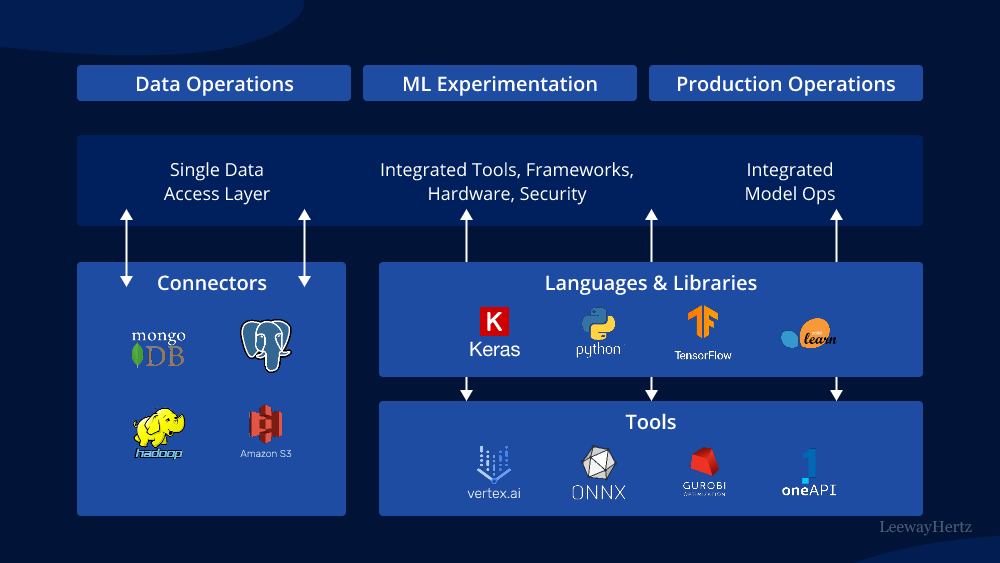
Enterprise AI development refers to the process of creating artificial intelligence solutions specifically tailored for businesses and organizations. These solutions are designed to address unique challenges and opportunities within the enterprise environment, leveraging the power of AI technologies like machine learning, natural language processing, computer vision, and data analytics.
Enterprise AI solutions are not one-size-fits-all; they are highly customizable to meet the specific needs of individual companies. These solutions can be applied across various sectors, including finance, healthcare, manufacturing, retail, and more. The goal of Enterprise AI development is to harness the capabilities of AI to enhance efficiency, automate processes, and drive innovation within an organization.
The Role of Enterprise AI Companies
Enterprise AI company play a pivotal role in the development and deployment of AI solutions tailored for business needs. These companies are at the forefront of technological advancements, and they bring a wealth of expertise and experience to the table. Here are some key functions of Enterprise AI companies:
- Research and Development: Enterprise AI companies invest heavily in research and development to create cutting-edge AI technologies. They continuously explore new algorithms, frameworks, and methodologies to ensure that their solutions remain at the forefront of innovation.
- Custom Solution Development: One of the primary functions of Enterprise AI companies is to work closely with businesses to understand their unique challenges. They then design and develop customized AI solutions that address these challenges effectively.
- Data Integration: Enterprise AI often relies on large volumes of data. These companies excel at integrating data from various sources, cleaning and preparing it for analysis, and ensuring data security and compliance.
- Training and Implementation: Developing an AI model is only part of the process. Enterprise AI companies provide training and implementation services to ensure that the AI solutions are seamlessly integrated into an organization’s existing workflows and systems.
- Monitoring and Maintenance: AI models require continuous monitoring and fine-tuning to maintain their accuracy and effectiveness. Enterprise AI companies provide ongoing support and maintenance services to ensure optimal performance.
Enterprise AI Services
Enterprise AI services encompass a wide range of offerings designed to help businesses leverage AI effectively. These services can be categorized into several key areas:
- Consulting and Strategy: Enterprise AI companies offer consulting services to help businesses formulate an AI strategy aligned with their goals. They assess the feasibility of AI adoption, identify potential use cases, and create a roadmap for implementation.
- Data Analysis and Preparation: Data is the lifeblood of AI, and Enterprise AI services include data analysis and preparation to ensure that data is clean, relevant, and ready for AI model training.
- AI Model Development: This service involves the creation of AI models tailored to specific business needs. It includes selecting appropriate algorithms, training models, and fine-tuning them for optimal performance.
- Deployment and Integration: Once an AI model is developed, it needs to be deployed and integrated into an organization’s existing systems. Enterprise AI services help ensure a seamless transition.
- Training and Education: Companies may lack the in-house expertise needed to fully utilize AI solutions. Enterprise AI services often provide training and education programs to empower businesses and their employees with AI knowledge and skills.
- Performance Monitoring and Optimization: AI models require ongoing monitoring to ensure they continue to deliver value. Enterprise AI services include performance monitoring and optimization to maintain peak performance.
- Scalability and Flexibility: As businesses grow, their AI needs may change. Enterprise AI services should be scalable and flexible to adapt to evolving requirements.
The Transformative Potential of Enterprise AI Solutions
The adoption of Enterprise AI solutions has the potential to revolutionize businesses across industries. Here are some of the ways in which AI can bring about transformative changes:
- Improved Decision-Making: AI can analyze vast amounts of data in real-time, providing businesses with actionable insights that can lead to more informed and strategic decision-making.
- Process Automation: Mundane and repetitive tasks can be automated with AI, freeing up employees to focus on more value-added activities. This not only reduces costs but also increases efficiency.
- Enhanced Customer Experiences: AI-powered chatbots and personalized recommendations can greatly enhance customer experiences, leading to increased customer satisfaction and loyalty.
- Predictive Analytics: AI can predict future trends and events based on historical data, helping businesses anticipate market changes and plan accordingly.
- Cost Reduction: By automating processes and optimizing resource allocation, AI can significantly reduce operational costs.
- Risk Management: AI can analyze data to identify potential risks and vulnerabilities, allowing businesses to proactively address them.
- Competitive Advantage: Companies that embrace AI early gain a competitive advantage by being more agile, efficient, and innovative.
Case Studies: Real-World Impact of Enterprise AI
Let’s look at a couple of real-world examples to illustrate the transformative potential of Enterprise AI solutions:
- Finance: Financial institutions use AI algorithms to detect fraudulent transactions in real-time, preventing losses and ensuring the security of customer accounts.
- Healthcare: AI-powered diagnostic tools can analyze medical images and patient data to assist doctors in making accurate diagnoses and treatment recommendations.
- Manufacturing: AI-driven predictive maintenance can forecast equipment failures, allowing manufacturers to schedule maintenance before a breakdown occurs, minimizing downtime.
- Retail: AI-driven recommendation engines analyze customer behavior to provide personalized product recommendations, leading to increased sales and customer satisfaction.
Conclusion
Enterprise AI development and services have emerged as essential components of modern business strategy. By partnering with Enterprise AI companies and leveraging their services, organizations can harness the transformative potential of AI to streamline operations, make data-driven decisions, and stay ahead of the competition.
As AI technology continues to evolve, businesses that invest in Enterprise AI solutions will be better positioned to adapt to the ever-changing business landscape and unlock new opportunities for growth and innovation. In a world where data is king, Enterprise AI is the key to turning that data into actionable insights and driving success in the digital age.
 Archie Evans Info